Estimated reading time: 9–10 minutes
Category: AI Strategy | Software | Future of Work | Business Models
Executive Summary
Cursor is often described as an AI coding tool. That description is technically correct but strategically incomplete.
The real significance of Cursor is that it shows how AI-native companies can create enterprise-scale value by owning high-frequency workflows rather than owning the underlying foundation model. Anysphere, the company behind Cursor, reportedly reached a $9bn valuation after a $900mn funding round, with the Financial Times reporting rapid adoption among major technology companies including Stripe, OpenAI and Spotify.
This matters because Cursor sits at the centre of three major shifts: developers are adopting AI tools quickly, investors are rewarding AI application companies, and the evidence on AI productivity is more nuanced than the hype suggests. Stack Overflow’s 2025 survey found that 84% of developers use or plan to use AI tools, while 51% of professional developers use them daily.
For CEOs, the lesson is not “buy AI coding tools”. The lesson is that AI changes where competitive advantage comes from. In the SaaS era, software stored information and improved processes. In the AI-native era, software increasingly participates in the work itself.
Executive Insight: Cursor is not important because it writes code. It is important because it shows how AI changes the economics of growth.
1. Why Cursor Grew So Quickly
Cursor’s growth is not simply the result of AI hype. Many AI coding tools exist. Cursor’s advantage has been its position inside the developer’s daily workflow.
Developers do not occasionally use their coding environment. They live inside it. That makes the editor one of the highest-frequency surfaces in enterprise software. Cursor’s strategic decision was to own that surface rather than remain a plug-in, assistant or model layer.
Michael Truell, Cursor’s CEO, has explained in an a16z interview that the company deliberately rejected the broad “democratisation of programming” narrative and focused instead on power users, product velocity and the decision to own the editor when conventional wisdom suggested that was too difficult.
That is a crucial strategic point. Cursor did not start by trying to make everyone a programmer. It focused on making already capable developers materially more productive. That gave the product a demanding user base, fast feedback loops and strong credibility among technical teams.
For CEOs outside software, this is the lesson: AI adoption is strongest when it begins with a high-value workflow where users already feel pain, spend significant time, and can see immediate productivity benefits.
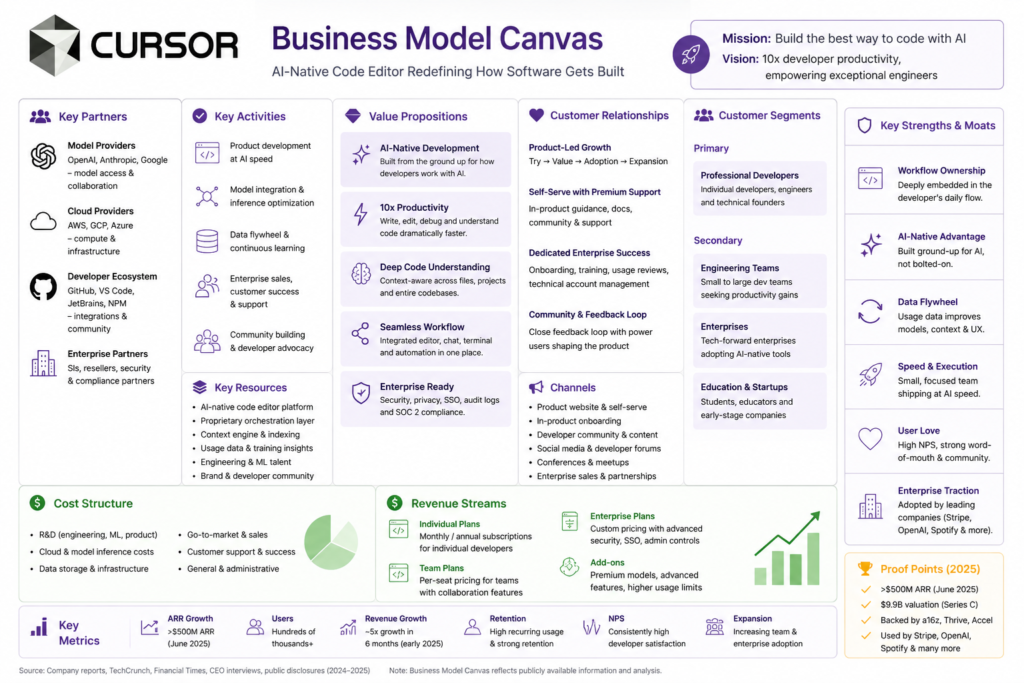
Figure 1 Cursor’s AI-Native Business Model: How Anysphere Built One of the World’s Fastest-Growing Software Companies
2. Cursor Sells Engineering Capacity, Not Software
Traditional SaaS companies sell licences. Cursor sells something more valuable: engineering capacity.
For a business employing expensive software engineers, even a modest improvement in output can justify subscription costs quickly. The purchasing decision is therefore different from ordinary software procurement. Leaders are not asking, “Do we need another tool?” They are asking, “Can this increase the output of our engineering organisation?”
This is why AI-native applications can command investor attention despite relying on models from OpenAI, Anthropic or others. The commercial value is not only in the model. It is in converting model capability into measurable workflow improvement.
The Financial Times noted that Cursor’s rapid rise reflects a broader investor shift towards AI application companies, while also warning that some revenues may reflect experimentation rather than durable long-term adoption.
That warning matters. CEOs should not confuse adoption with proven ROI. The strategic question is not whether employees are using AI tools. It is whether AI is improving cycle time, quality, cost, risk and customer outcomes.
3. The Productivity Evidence Is Powerful but Uneven
The strongest article on Cursor must avoid one common mistake: assuming AI coding tools automatically improve productivity.
The evidence is mixed.
Microsoft-backed research on GitHub Copilot found that developers using Copilot completed a controlled JavaScript task 55.8% faster than those without it.
However, a 2025 randomised controlled trial by METR found the opposite in a different setting. Experienced open-source developers working on mature repositories took 19% longer when allowed to use AI tools, even though they expected AI to make them faster. Reuters also reported that the slowdown appeared to come from the time required to review and correct AI-generated suggestions.
The insight for leaders is not that AI works or does not work. It is that AI productivity depends on context.
AI appears most valuable where work is well-scoped, repetitive, unfamiliar, documentation-heavy or bottlenecked by speed. It may be less valuable, or even counterproductive, where experienced specialists work on complex, mature systems requiring deep context, high reliability and careful review.
Executive Insight: AI ROI is not a technology question. It is a workflow-design question.
4. Why Microsoft Has Not Crushed Cursor
A superficial analysis would assume GitHub Copilot should dominate because Microsoft owns GitHub, Visual Studio Code and vast enterprise distribution.
That distribution advantage is real. But Cursor’s rise shows that in fast-moving AI markets, product velocity and workflow fit can still challenge incumbent scale.
GitHub Copilot is powerful because it sits inside existing developer infrastructure. Cursor’s advantage is different: it is an AI-native environment designed around the full development workflow. It is not merely suggesting code. It is increasingly shaping how developers navigate, edit, reason, debug and refactor code.
This distinction matters because the competitive battleground is changing. The market is no longer just “code completion”. It now includes AI agents, multi-file edits, terminal workflows, code review, project understanding, documentation, testing and deployment support.
The relevant competitors are therefore not only GitHub Copilot. They include Anthropic’s Claude Code, OpenAI Codex, Replit, Windsurf and emerging agentic development platforms. Each represents a different strategic bet: model quality, enterprise distribution, end-to-end workflow, developer experience or autonomous execution.
Cursor’s lesson is that incumbents do not always win when a new workflow emerges. Distribution is powerful, but it can be offset by speed, focus and a product built natively around the new technology.
5. Cursor’s Real Moat Is Not the Model
Cursor’s long-term risk is obvious: it depends partly on foundation models that others own. If OpenAI, Anthropic, Google or Microsoft improve their own coding products, Cursor faces pressure.
But this is why the moat question is more subtle.
Cursor’s advantage is unlikely to come from a single model. Models are improving quickly and can be accessed by competitors. Its more durable advantages may come from five areas:
Workflow ownership — Cursor sits where developers actually work.
User trust — Developers adopt tools only when they believe output can be inspected, corrected and controlled.
Learning velocity — High-frequency usage creates rapid product feedback.
Enterprise adoption — Once teams standardise workflows, switching becomes harder.
Product taste — In AI tools, interface and judgement increasingly matter as much as raw model capability.
This is why Truell’s focus on power users is strategically important. Power users expose weaknesses quickly. Products that satisfy them often develop deeper capability than products designed only for broad accessibility.
6. The Business Model Shift: From SaaS to AI-Native Workflows
Cursor’s broader significance is that it points towards a new model of software value.
Traditional SaaS helped people manage work. AI-native software increasingly performs parts of work.
That changes the economics.
In traditional SaaS, value came from records, dashboards, workflow automation and collaboration. In AI-native applications, value increasingly comes from output: code written, documents analysed, customer cases resolved, proposals drafted, risks identified, decisions supported.
That means AI application companies are closer to labour productivity than software administration.
For CEOs, this has two implications.
First, AI tools should be evaluated against business output, not tool usage. The right metrics are release velocity, defect rates, customer satisfaction, revenue per employee, cycle time and quality.
Second, companies should not simply add AI features to existing workflows. They should redesign workflows around where AI can reduce friction, improve decisions and increase capacity.
Executive Insight: The biggest AI winners may not be companies with the best model. They may be companies that own the workflow where the model becomes useful.
7. What CEOs Should Learn from Cursor
Cursor offers five practical lessons for leaders.
1. Start with painful, frequent work
Cursor targeted a workflow developers use every day. AI creates the greatest value where work is frequent, expensive and frustrating.
2. Focus on expert users first
Cursor did not begin by trying to replace developers. It made strong developers stronger. That built credibility.
3. Measure productivity honestly
The evidence shows AI can accelerate simple tasks but slow complex ones. CEOs need controlled measurement, not assumptions.
4. Own the workflow, not just the feature
AI features are easy to copy. Workflow ownership is harder.
5. Treat AI as operating-model change
The strongest AI strategies redesign work, roles, governance and performance metrics together.
8. Strategic Framework: The AI-Native Advantage Model
For directors assessing AI opportunities, Cursor suggests a simple test.
An AI-native business becomes defensible when it combines:
High-frequency workflow
The product is used daily or continuously.
Clear economic value
The product improves speed, quality, cost or capacity.
Human-in-the-loop trust
Users can inspect and control outputs.
Workflow integration
The tool fits naturally into how work is done.
Learning velocity
The company improves faster than incumbents.
Reduced model dependence
The company creates value beyond access to a third-party model.
This framework applies beyond software. The same logic will shape AI in law, consulting, accounting, healthcare, engineering, education and public services.
Every sector has workflows where expert time is expensive, demand exceeds capacity and customers want faster outcomes. Those are the places where AI-native challengers will emerge.
Conclusion: Cursor Is a Warning to Every Industry
Cursor may or may not remain the dominant AI coding platform. Competition from Microsoft, Anthropic, OpenAI, Replit and others will intensify.
But Cursor’s lasting significance is larger than its market share.
It shows that AI-native companies can grow rapidly by embedding intelligence into high-value workflows. It shows that product velocity can challenge incumbent distribution. It shows that AI productivity is real but context-dependent. And it shows that the next generation of software companies may scale output faster than headcount.
For CEOs, Cursor is not a story about coding.
It is a warning that every industry now has its own Cursor waiting to be built.
The winners will not be those that simply buy AI tools. They will be those that redesign work around AI before competitors do.