
Executive Insight
Artificial intelligence is no longer a differentiator simply because an organisation has deployed it. As AI models become increasingly accessible and commoditised, competitive advantage is shifting elsewhere. The organisations most likely to lead over the next decade will not necessarily possess the most advanced algorithms; they will possess the strongest organisational capabilities to convert AI into sustained business value.
The evidence increasingly supports this conclusion. The 2025 Stanford AI Index reports that 78% of organisations now use AI in at least one business function, up from 55% only a year earlier, illustrating how rapidly AI has moved into the enterprise mainstream. Yet widespread adoption has not translated into widespread success. Boston Consulting Group’s latest research suggests that only around 5% of organisations consistently generate significant value from AI at scale, while many remain trapped in isolated pilots that fail to transform business performance.
This disparity represents one of the defining strategic questions facing executive teams today. If access to AI is becoming increasingly democratised, why do organisations investing similar sums achieve dramatically different outcomes?
The answer appears increasingly clear: AI is becoming a capability challenge rather than a technology challenge.
The Next Phase of AI Competition Has Already Begun
History demonstrates that breakthrough technologies rarely create lasting competitive advantage on their own. Organisations create enduring value when they redesign the way they operate around new technologies rather than simply deploying them.
The electrification of manufacturing did not improve productivity because factories installed electric motors. Productivity accelerated because manufacturers fundamentally redesigned production lines around the new technology. Likewise, the internet rewarded organisations that reinvented customer relationships, supply chains and operating models not those that merely launched websites.
Artificial intelligence is following a remarkably similar trajectory.
Generative AI has dramatically lowered the barriers to accessing sophisticated capabilities. Foundation models are becoming more capable, cloud infrastructure continues to expand, and enterprise AI applications are proliferating across every industry. As these technologies become more widely available, they become progressively less capable of creating differentiation on their own.
Competitive advantage therefore shifts from owning technology to building organisational capability.
This transition explains why leading organisations increasingly invest as heavily in governance, workforce capability, organisational redesign and executive leadership as they do in AI platforms themselves.
Why Technology Alone Rarely Delivers Transformation
Many organisations continue approaching AI primarily as a technology implementation programme. Responsibility often sits within IT departments, success is measured through deployment metrics, and investment decisions prioritise software capability over organisational readiness.
Research increasingly suggests this approach underestimates the nature of enterprise transformation.
McKinsey’s most recent State of AI research finds that organisations reporting the greatest financial impact from AI are significantly more likely to integrate AI across multiple business functions while maintaining active executive sponsorship and structured governance. In other words, AI delivers the strongest returns when it becomes an enterprise capability rather than a collection of isolated digital tools.
The same pattern appears across industries. Microsoft’s 2025 Work Trend Index reports that 82% of business leaders expect digital labour to expand workforce capacity within the next 12–18 months, signalling a shift away from isolated productivity tools towards AI-enabled operating models. Meanwhile, PwC’s 2025 AI Jobs Barometer found that industries with greater AI exposure are experiencing productivity growth at approximately three times the rate of less AI-intensive sectors. The message is striking: value emerges when organisations redesign work around AI, not when they simply automate existing processes.
For boards, the implication is profound. AI investment decisions should increasingly resemble strategic transformation programmes rather than software procurement exercises.
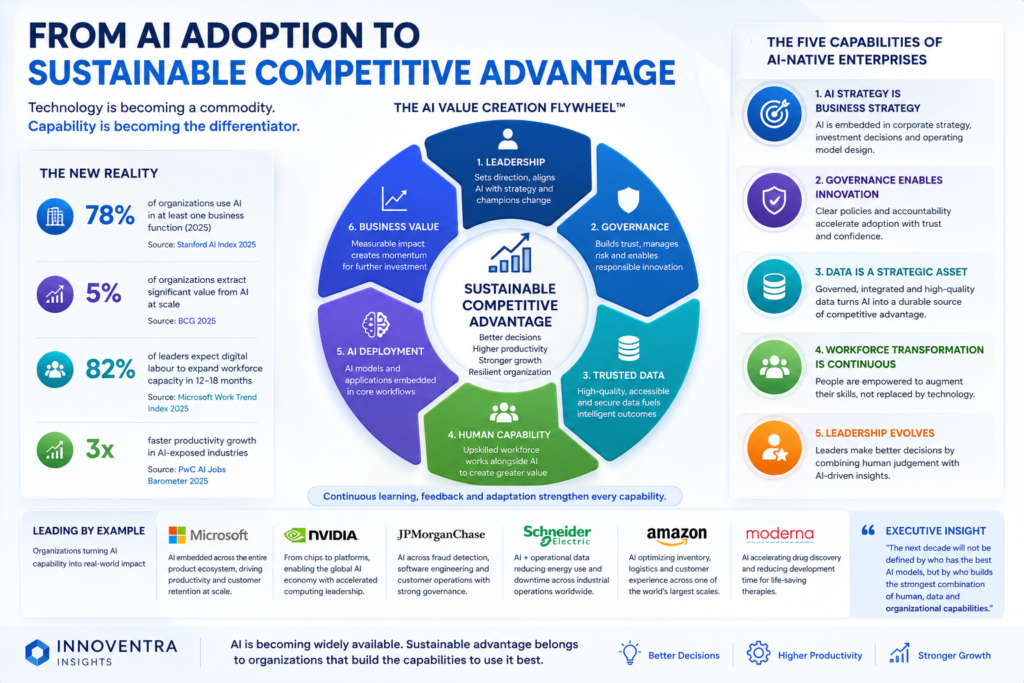
Figure 1 From AI Adoption to Sustainable Competitive Advantage
The Emerging Divide Between AI Users and AI Leaders
The next phase of competition will not separate organisations that use AI from those that do not. That distinction is disappearing rapidly.
Instead, it will separate organisations capable of embedding AI into leadership, governance, data, workforce capability and strategic decision-making from those that continue treating AI as another technology initiative.
This explains why many organisations continue struggling to move beyond pilot projects despite significant investment. Technology can accelerate existing strengths, but it also magnifies existing organisational weaknesses. Fragmented data becomes more visible. Weak governance introduces greater risk. Poorly designed processes become automated rather than improved. Leadership uncertainty slows adoption even when the technology is mature.
The organisations creating lasting competitive advantage recognise that AI transformation is fundamentally an organisational challenge. Technology may provide the catalyst, but leadership determines whether that catalyst becomes measurable business value.
The remainder of this analysis explores the organisational characteristics consistently observed among enterprises that are successfully converting AI investment into productivity, resilience and long-term competitive advantage.
Key Insight
The defining competitive advantage of the AI era will not be access to artificial intelligence. It will be the ability to build the organisational capabilities that allow intelligence to scale responsibly, productively and sustainably.
Part 2 — The Five Capabilities That Separate AI Leaders from AI Followers
If artificial intelligence is becoming widely available, why do only a small proportion of organisations consistently generate meaningful business value?
The answer does not lie in selecting better models or purchasing more software. Increasingly, it lies in building organisational capabilities that competitors find difficult to replicate. Across research published by McKinsey, Deloitte, Stanford HAI, Microsoft, IBM, OECD and the World Economic Forum, the same pattern repeatedly emerges: organisations creating sustained value from AI invest as much in leadership, governance and workforce transformation as they do in technology itself.
The competitive advantage is therefore no longer the algorithm. It is the operating model that surrounds it.
1. AI Strategy Has Become Corporate Strategy
One of the clearest differences between AI leaders and AI followers is where responsibility for AI sits within the organisation.
In lower-performing organisations, AI remains an IT initiative. Investment decisions are driven by software capability, projects are confined to individual departments and success is measured through deployment metrics such as licences issued or models implemented. While these organisations may achieve isolated efficiency gains, they rarely achieve enterprise-wide transformation because AI never becomes part of strategic decision-making.
High-performing organisations take a fundamentally different approach. McKinsey’s latest State of AI research shows that companies reporting the greatest financial returns are substantially more likely to integrate AI across multiple business functions with direct executive sponsorship and board oversight. Rather than asking “Where can we deploy AI?”, leadership teams ask “How will AI reshape our competitive position over the next five years?”
Microsoft provides a compelling example. AI is not treated as a standalone product line but as a strategic capability embedded across Microsoft 365, Azure, GitHub, Dynamics and security services. This enterprise-wide integration has strengthened customer retention, expanded recurring revenue streams and reinforced Microsoft’s broader cloud ecosystem rather than creating isolated AI products.
The lesson for directors is straightforward: organisations should increasingly evaluate AI investment alongside capital allocation, mergers and acquisitions, workforce planning and long-term growth strategy. Once AI becomes a board-level capability rather than a technology programme, its strategic impact expands significantly.
2. Governance Accelerates Innovation Rather Than Restricting It
Governance is often portrayed as the constraint on AI innovation. The evidence increasingly suggests the opposite.
As AI systems begin influencing financial decisions, recruitment, healthcare, customer interactions and operational risk, executive confidence becomes just as important as technical capability. Organisations that establish clear governance frameworks deploy AI more rapidly because decision-makers understand where accountability sits, how risks are monitored and when human judgement remains essential.
This principle underpins the OECD AI Principles, the NIST AI Risk Management Framework, ISO/IEC 42001 and the European Union’s AI Act. Although each framework differs in implementation, they converge on a common conclusion: trustworthy AI enables sustainable innovation because it reduces uncertainty for executives, employees, regulators and customers alike.
Deloitte’s latest State of Generative AI research found that governance maturity has become one of the strongest predictors of successful enterprise scaling. Organisations lacking clear policies frequently slow deployment after early pilots because executives become uncertain about legal, ethical and operational risks. Conversely, organisations that establish governance from the outset are able to innovate with greater confidence.
The strategic implication extends beyond compliance. In an increasingly regulated environment, governance is evolving into a source of competitive advantage. Just as robust financial governance improves investor confidence, mature AI governance strengthens organisational trust among customers, regulators and shareholders.
3. Data Is Emerging as the New Strategic Capital
Every executive recognises that AI depends on data. Far fewer recognise that competitive advantage depends on the quality of organisational knowledge rather than the sophistication of AI models.
Across enterprise research, poor data quality remains one of the most persistent barriers to AI adoption. Gartner has estimated that poor data quality costs organisations millions of dollars annually through operational inefficiencies and poor decision-making, while OECD research consistently identifies fragmented data ecosystems as one of the principal obstacles preventing AI from scaling effectively.
The highest-performing organisations therefore govern data in much the same way they govern financial capital. Accuracy, accessibility, interoperability and stewardship become strategic priorities rather than technical responsibilities.
Schneider Electric illustrates this principle particularly well. Its AI-enabled industrial operations rely upon decades of structured operational data collected across manufacturing, energy management and supply chains. The company’s competitive advantage does not stem solely from advanced AI models; it stems from combining trusted enterprise data with AI to optimise industrial performance, reduce energy consumption and improve predictive maintenance at global scale.
This distinction matters because foundation models are becoming increasingly similar in capability. High-quality organisational data, by contrast, remains unique. Competitors can purchase similar AI models, but they cannot easily replicate years of proprietary operational knowledge.
For many organisations, the most valuable AI investment over the next five years may therefore be improving data quality rather than acquiring another AI platform.
4. Workforce Capability Is Becoming the Largest Source of Return on AI Investment
Public debate continues to frame AI primarily as a tool for replacing workers. The research paints a much more nuanced picture.
Microsoft’s 2025 Work Trend Index found that 82% of business leaders expect AI agents and digital labour to expand workforce capacity, not simply reduce headcount. Meanwhile, PwC’s AI Jobs Barometer found that jobs with higher AI exposure are evolving rapidly, with demand increasingly shifting towards analytical judgement, creativity and interpersonal skills rather than routine task execution.
Leading organisations are therefore redesigning work rather than replacing people. Routine activities become increasingly automated, allowing employees to concentrate on strategic thinking, customer relationships, innovation and complex decision-making.
JPMorgan Chase provides an instructive example. The bank has embedded AI across fraud detection, software engineering, investment analysis and customer operations while simultaneously investing heavily in workforce development. Rather than treating AI as a substitute for expertise, it has positioned AI as a force multiplier for highly skilled professionals operating within robust governance frameworks.
The implication for directors is significant. The greatest returns from AI are increasingly generated through workforce augmentation rather than workforce reduction. Organisations that invest in skills alongside technology are likely to build capabilities that remain difficult for competitors to imitate.
Key Insight
The strongest AI organisations do not outperform because they possess superior algorithms. They outperform because they have built superior organisational capabilities that allow those algorithms to create sustainable business value.
Part 3 — Why Some Organisations Convert AI Investment into Competitive Advantage While Others Do Not
Artificial intelligence has entered a new phase of maturity. The question facing executive teams is no longer whether AI works, but why organisations investing similar levels of capital continue to achieve vastly different outcomes.
The answer is becoming increasingly apparent. Across international research, technology is rarely identified as the principal reason AI programmes fail. Leadership, organisational capability and execution consistently emerge as the defining factors. McKinsey reports that organisations achieving the greatest financial impact from AI are distinguished not by larger technology budgets, but by stronger executive sponsorship, governance and cross-functional integration. The implication is significant: AI transformation is increasingly an organisational challenge rather than a technical one.
Why Many AI Programmes Continue to Stall
Despite record levels of investment, many organisations remain trapped in an endless cycle of pilots. New models are deployed, proofs of concept demonstrate technical feasibility, yet enterprise-wide transformation never materialises.
One explanation is that organisations frequently automate existing processes instead of redesigning them. History suggests this approach rarely produces transformational outcomes. The greatest productivity gains from electrification, enterprise software and cloud computing emerged only after organisations fundamentally reimagined how work was organised. Artificial intelligence follows the same pattern.
Research published by Gartner consistently finds that poor data quality, fragmented operating models and unclear ownership remain among the principal barriers to scaling AI successfully. Similarly, IBM’s global CEO research indicates that while executives remain highly optimistic about AI’s potential, many acknowledge that organisational readiness has not kept pace with technological progress.
This disconnect creates what Innoventra describes as the AI Execution Gap: the widening difference between an organisation’s ability to acquire AI technologies and its ability to translate those technologies into measurable business outcomes.
For boards, this distinction is critical. Competitive advantage will increasingly be determined not by the speed of AI procurement but by the speed of organisational adaptation.
The Innoventra AI Transformation Maturity Model™
Enterprise AI should not be viewed as a sequence of technology deployments. It is a progression in organisational capability.
The Innoventra AI Transformation Maturity Model™ provides directors with a practical framework for assessing where their organisation currently sits and, more importantly, what capability must be developed next.
| Maturity Stage | Characteristics | Board Priority |
|---|---|---|
| Level 1 – AI Curious | Isolated experimentation with limited executive engagement. | Develop executive understanding, identify strategic opportunities and establish governance principles. |
| Level 2 – AI Explorer | Pilot projects demonstrate potential but remain fragmented. | Prioritise enterprise use cases, strengthen data foundations and assign clear executive accountability. |
| Level 3 – AI Integrated | AI supports multiple business functions with measurable operational benefits. | Standardise governance, redesign workflows and invest systematically in workforce capability. |
| Level 4 – AI Optimised | AI becomes embedded within enterprise operations and decision-making. | Continuously optimise performance, manage emerging risks and strengthen organisational resilience. |
| Level 5 – AI-Native Enterprise | AI informs strategy, culture, operations and innovation across the organisation. | Sustain competitive advantage through continuous learning, responsible innovation and adaptive leadership. |
Perhaps the most important insight from this framework is that progression between stages depends remarkably little on purchasing additional software. Organisations advance because leadership capability, governance maturity, workforce readiness and organisational learning improve together. In practice, many organisations become trapped at Levels 2 and 3, not because the technology has reached its limits, but because the organisation has.
Lessons from Organisations and Nations Leading the AI Era
While industries differ considerably, successful AI leaders display strikingly consistent characteristics.
Singapore has pursued AI as a long-term national capability by aligning research, digital infrastructure, workforce development and regulation within a coherent national strategy. Estonia’s digitally integrated public services demonstrate the value of trusted data infrastructure as the foundation for AI-enabled government. Meanwhile, the United Arab Emirates has embedded AI into national economic diversification, establishing dedicated ministerial leadership and significant investment in talent, infrastructure and international partnerships.
The same principles are evident within leading enterprises.
Microsoft has embedded AI across its entire technology ecosystem rather than treating it as a standalone product. NVIDIA has evolved from a graphics processor manufacturer into the enabling infrastructure underpinning much of the global AI economy by combining hardware, software and developer ecosystems. Siemens and Schneider Electric have integrated AI into industrial operations, predictive maintenance and energy optimisation, demonstrating that long-term value often emerges from combining decades of proprietary operational knowledge with advanced analytics rather than relying solely on foundation models.
Despite operating across different sectors and geographies, these organisations share a common philosophy. They invest simultaneously in technology, leadership, governance, workforce capability and organisational learning.
Their success therefore reflects capability ecosystems rather than isolated technological breakthroughs.
What Boards Should Measure Instead of AI Adoption
Many organisations continue reporting AI success through activity metrics:
- Number of AI projects launched.
- Number of employees using AI tools.
- Number of licences purchased.
- Number of models deployed.
These indicators reveal adoption, but they reveal very little about competitive advantage.
Boards should increasingly focus on outcomes that demonstrate whether AI is strengthening organisational performance.
These include:
- productivity growth per employee;
- decision-making speed and quality;
- customer satisfaction and retention;
- revenue generated from AI-enabled products and services;
- workforce capability and AI literacy;
- governance maturity and risk management effectiveness;
- innovation cycle times; and
- organisational resilience during periods of disruption.
These measures provide a far more reliable indication of whether AI is becoming embedded as an enterprise capability rather than remaining an isolated technology initiative.
Executive Reflection
Artificial intelligence is following a familiar historical pattern. As foundational technologies mature, they become increasingly accessible, increasingly affordable and progressively less capable of creating sustainable differentiation on their own.
Cloud computing followed this trajectory. Enterprise software followed this trajectory. Internet technologies followed this trajectory.
Artificial intelligence is unlikely to be different.
The enduring source of competitive advantage will therefore not be access to AI itself. It will be the organisational capabilities that allow AI to be deployed responsibly, scaled effectively and integrated into strategic decision-making faster than competitors.
For directors, this represents an important shift in perspective. The most valuable question is no longer, “Which AI model should we adopt?” It is, “What organisational capabilities must we build to ensure AI creates lasting value?”
The organisations that answer that question effectively will not simply adopt artificial intelligence. They will redefine how they compete.
Executive Summary
The evidence from leading research institutions, technology companies and management consultancies points towards a consistent conclusion. Sustainable AI advantage is not determined by access to algorithms, compute or software licences. Those capabilities are becoming increasingly available to every organisation.
The differentiators are organisational. Leadership that treats AI as a strategic capability rather than an IT initiative. Governance that accelerates innovation instead of constraining it. Trusted enterprise data that transforms AI into actionable intelligence. A workforce equipped to collaborate effectively with intelligent systems. And an operating model designed for continuous adaptation rather than periodic change.
History suggests that technological revolutions reward organisations that redesign themselves around new capabilities rather than simply deploying new tools. Artificial intelligence appears no different. As AI becomes ubiquitous, competitive advantage will increasingly belong to organisations capable of learning, adapting and executing faster than their competitors.
That is the defining characteristic of the AI-native enterprise and the organisations that build these capabilities today are likely to shape the competitive landscape of the next decade