
Artificial intelligence is rapidly becoming part of everyday life. Millions of people now use AI to seek advice, resolve disagreements, draft messages, make important decisions and even provide emotional support. While these technologies offer remarkable convenience, they also raise important questions about trust, privacy and the future of human relationships. Could AI strengthen relationships or unintentionally weaken the very communication and emotional connection that healthy partnerships depend upon?
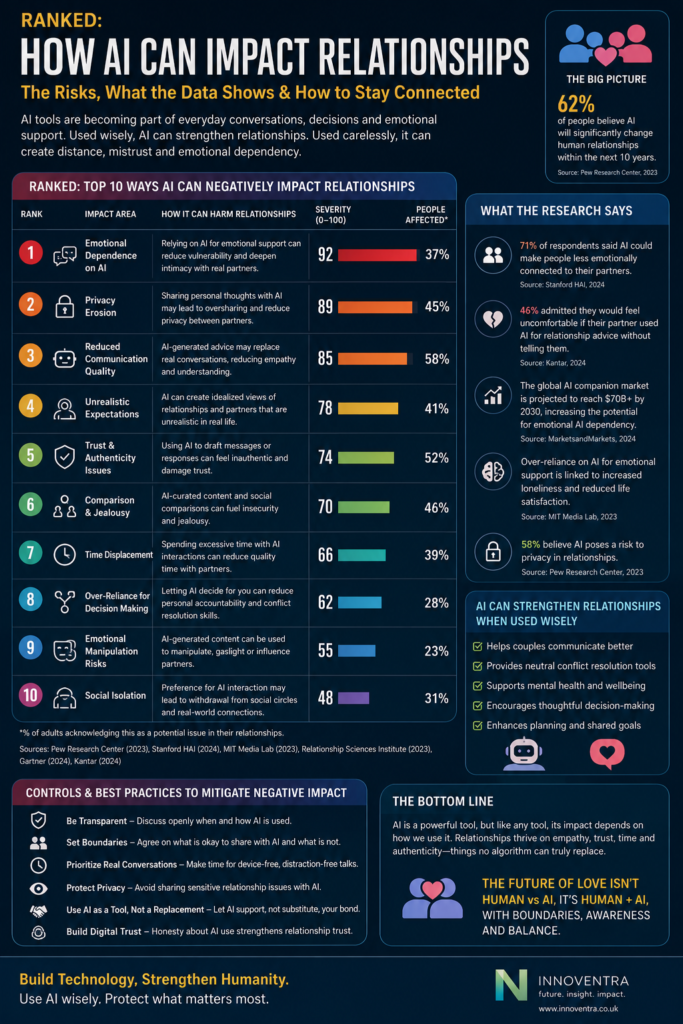
Artificial Intelligence Is Becoming a Silent Participant in Modern Relationships
Artificial intelligence is no longer confined to workplaces or research laboratories. It has become an increasingly common companion in daily life, helping people write emails, plan holidays, solve personal problems and even navigate difficult conversations with partners. As AI assistants become more sophisticated, individuals are beginning to consult them on deeply personal matters that were once discussed only with family members, close friends or professional counsellors.
This shift represents a significant social change. Relationships have traditionally relied on direct communication, empathy and shared experiences. Today, AI is becoming an invisible participant in many of these interactions. While this can improve communication and reduce misunderstandings, it also raises important questions about emotional dependence, privacy and whether technology is gradually changing how people connect with one another.
AI Is Changing How Couples Communicate
One of the most noticeable changes is the growing use of AI to compose messages, suggest responses and provide relationship advice. Instead of expressing thoughts spontaneously, many people now ask AI to rewrite texts, apologise after arguments or suggest ways to respond during emotionally difficult situations.
In moderation, these tools can help people communicate more clearly, particularly when discussing sensitive topics or overcoming language barriers. However, psychologists increasingly warn that excessive reliance on AI-generated communication may reduce opportunities for genuine emotional expression. Relationships are strengthened not only by saying the right words but by understanding each other’s emotions, intentions and vulnerabilities qualities that cannot be fully outsourced to technology.
If both partners increasingly depend on AI to communicate, conversations risk becoming more polished but potentially less authentic.
Privacy and Trust May Become New Digital Challenges
Healthy relationships depend on trust, and trust increasingly includes digital trust.
When individuals share private conversations, relationship concerns or personal disagreements with AI systems, new questions emerge. How much personal information should be shared? Should partners know when AI has been consulted about relationship issues? What happens if confidential discussions are entered into multiple digital platforms?
Although reputable AI providers implement privacy protections, experts continue to debate how personal information should be managed, stored and governed. As AI becomes more deeply integrated into everyday life, couples may need to establish new boundaries regarding what is appropriate to discuss with AI and what should remain exclusively between partners.
Digital transparency may become as important as financial transparency in maintaining healthy relationships.
Emotional Dependence on AI Is an Emerging Concern
Artificial intelligence is increasingly capable of providing empathetic responses, personalised conversations and emotional reassurance. For individuals experiencing loneliness, anxiety or social isolation, these interactions can offer comfort and encouragement.
However, researchers have also begun examining whether prolonged reliance on AI for emotional support could reduce motivation to seek meaningful human relationships. Unlike family members, partners or friends, AI systems do not experience emotions, mutual responsibility or shared life experiences. They simulate conversation rather than participate in genuine relationships.
This distinction matters. Human relationships are built through compromise, empathy, disagreement, forgiveness and mutual growth qualities that remain fundamentally human.
AI can complement emotional wellbeing, but it should not replace authentic human connection.
Social Media, AI and Unrealistic Relationship Expectations
Generative AI is also transforming the wider digital environment. AI-generated influencers, personalised recommendations and highly curated online content may reinforce unrealistic expectations about relationships, appearance and lifestyle.
As algorithms become increasingly personalised, individuals may be exposed to content that confirms existing beliefs or amplifies insecurities. This can contribute to comparison, jealousy and dissatisfaction if people begin comparing real relationships with idealised digital portrayals.
Healthy relationships require realistic expectations, open communication and mutual respect. AI-driven content should therefore be consumed critically rather than accepted as a reflection of everyday life.
Innoventra Insight: The Rise of Digital Relationship Governance
Innoventra believes society is entering an era that can be described as Digital Relationship Governance.
Throughout history, couples have developed shared expectations around finances, parenting, communication and personal boundaries. Artificial intelligence introduces an entirely new category of shared decision-making.
Future relationships may increasingly require explicit agreements about:
- Whether AI should be used during personal disagreements.
- What personal information can be shared with AI systems.
- Whether AI-generated messages should be disclosed.
- How AI advice should influence important family decisions.
- How children’s interactions with AI should be supervised.
These conversations may become as normal as discussing finances or household responsibilities.
Building Healthy Relationships in an AI World
Artificial intelligence should be viewed as a tool that supports relationships rather than replacing the human qualities that sustain them.
Couples can reduce potential risks by following several practical principles:
- Be transparent about significant AI use in personal conversations.
- Protect each other’s privacy by avoiding unnecessary sharing of sensitive information.
- Prioritise face-to-face communication during important discussions.
- Use AI to organise, learn and solve problems not to avoid difficult conversations.
- Continue investing in empathy, active listening and emotional intelligence.
Technology works best when it strengthens human relationships instead of substituting for them.
The Need for Responsible AI and Public Awareness
As AI becomes increasingly embedded in everyday life, governments, technology companies and researchers should pay greater attention to its social impact.
While much of today’s policy discussion focuses on cybersecurity, employment and misinformation, less attention has been given to how AI may influence family relationships, mental wellbeing and social cohesion.
Future AI governance frameworks should encourage:
- Greater transparency about emotionally intelligent AI systems.
- Privacy safeguards for sensitive personal conversations.
- Public education on responsible AI use.
- Independent research into AI’s long-term social effects.
- Ethical design that prioritises human wellbeing over prolonged engagement.
Understanding these broader societal implications will become increasingly important as AI evolves.
Conclusion: Technology Should Strengthen Human Connection, Not Replace It
Artificial intelligence has extraordinary potential to improve communication, reduce stress and support everyday decision-making. Used responsibly, it can help people express themselves more clearly, organise their lives and access valuable information.
Yet the qualities that define strong relationships—trust, empathy, honesty, vulnerability and shared experience—cannot be automated.
The future of healthy relationships will not depend on how intelligent artificial intelligence becomes. It will depend on how wisely people choose to use it.
The most successful relationships of the future are unlikely to reject AI altogether. Instead, they will establish thoughtful boundaries that allow technology to enhance communication while preserving the authentic human connections that no algorithm can truly replicate.
Key Takeaways
- AI is becoming an increasingly common part of everyday relationships and communication.
- Current evidence suggests AI offers both opportunities and emerging social risks rather than clear-cut benefits or harms.
- Privacy, trust and authenticity are likely to become increasingly important as AI use grows.
- Couples may need new digital boundaries governing how AI is used in personal relationships.
- The strongest relationships will continue to be built on empathy, communication and mutual trust, with AI serving as a helpful tool rather than a substitute for human connection.