
Artificial intelligence has become one of the defining investment priorities of the decade. Stanford’s 2025 AI Index found that 78% of organisations were using AI in 2024, up from 55% in 2023, while global private investment in generative AI reached $33.9 billion, more than eight times the level recorded in 2022.
Yet the most important question for 2026 is not who has AI? It is who can convert AI into durable advantage?
That distinction matters because access to AI is becoming easier, cheaper and more widespread. Many organisations now use similar cloud platforms, large language models, AI assistants and automation tools. But their results are diverging. Some are redesigning workflows, accelerating product development and improving decision quality. Others are running pilots, buying licences and struggling to prove return on investment.
Key insight: AI is becoming widely available. AI capability is not.
The AI race is entering a more difficult phase
For much of the past decade, AI leadership was measured through visible indicators: model performance, computing power, research publications, patents, venture capital investment and semiconductor access. These still matter. The United States remains far ahead on private AI investment, with Stanford reporting $109.1 billion of private AI investment in 2024, compared with $9.3 billion in China and $4.5 billion in the UK.
But investment leadership is not the same as transformation leadership.
History shows that general-purpose technologies rarely produce productivity gains simply because they exist. Electricity transformed factories only after production systems changed. The internet reshaped commerce only after organisations rebuilt logistics, payments, data systems and customer channels around it. AI is following the same pattern.
McKinsey’s 2025 State of AI research makes this point clearly: the organisations seeing stronger earnings impact are not merely adopting AI; they are rewiring workflows, governance, talent, data and operating models around it.
“The value of AI comes from rewiring how companies run.” McKinsey, State of AI 2025.
The winners will build capability ecosystems
Innoventra’s central argument is that sustainable AI success depends on the strength of the surrounding capability ecosystem.
A capability ecosystem includes:
- leadership that understands AI’s strategic purpose,
- employees with the skills to use AI responsibly,
- reliable data infrastructure,
- governance that enables safe adoption,
- workflows redesigned around AI,
- research and innovation links,
- and the ability to scale successful use cases across the organisation.
This matters because AI rarely creates advantage in isolation. It amplifies what already exists. A highly capable organisation can use AI to accelerate decisions, improve productivity and create new services. A poorly prepared organisation may simply automate confusion.
The IMF’s AI Preparedness Index takes a similar systems view at national level, measuring countries across digital infrastructure, human capital, innovation capacity, labour market policies, regulation and ethics.
Key insight: AI does not replace capability. It exposes it.
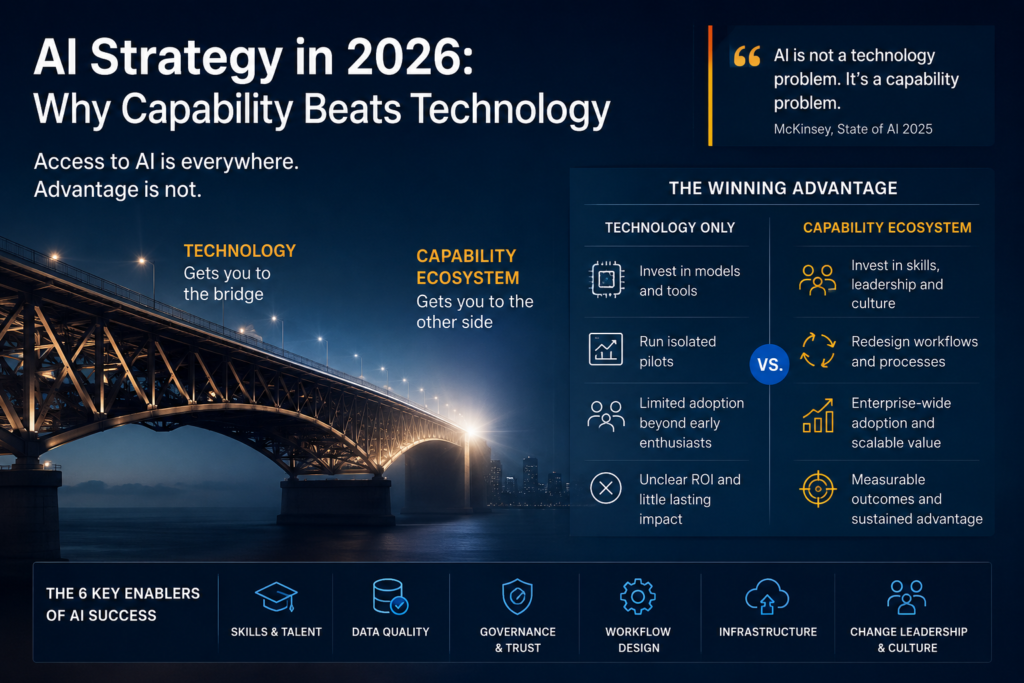
Figure 1. AI Success Depends on Capability, Not Technology Alone
Why many AI strategies underperform
The typical failing AI strategy follows a familiar pattern.
First, the organisation buys AI tools. Then it launches pilots. Then it encourages staff to experiment. Then executives ask where the value is.
The problem is not the technology. The problem is that adoption is being treated as transformation.
BCG’s 2025 research describes a widening gap between companies generating value from AI and those still stuck in fragmented adoption. It found that leading “future-built” companies are pulling ahead because they invest in workflow redesign, leadership engagement, workforce planning, data foundations and AI agents, while lagging firms remain stuck at experimentation.
That is the real divide in 2026. Not AI users versus non-users. AI scalers versus AI dabblers.
“The AI value gap is widening because some companies are redesigning the business around AI while others are still adding AI to existing processes.”
Case study: Microsoft shows why ecosystem beats tool adoption
Microsoft is a useful example of capability ecosystem strategy.
Its AI advantage is not simply that it has access to powerful models through its OpenAI partnership. The deeper advantage is distribution. Microsoft can embed AI into the tools millions of workers already use: Word, Excel, Outlook, Teams, GitHub, Azure and enterprise security environments.
That matters because AI does not require users to leave their workflow. It appears inside the operating system of work.
For business leaders, the lesson is significant. The most effective AI strategies do not ask employees to adopt disconnected tools. They bring AI into the places where decisions, documents, meetings, code, analysis and customer interactions already happen.
Microsoft’s case demonstrates the broader rule: AI becomes powerful when it is connected to workflows, data, governance, identity, security and user behaviour.
Key insight: The strongest AI strategies do not start with the model. They start with the workflow.
What business leaders should do differently in 2026
The first mistake is asking, “Which AI tool should we buy?”
The better question is:
Which business capabilities do we need to strengthen, and where can AI multiply them?
For executives, that means AI strategy should focus on five priorities.
First, connect AI directly to business outcomes. AI projects should support revenue growth, margin improvement, risk reduction, customer experience, productivity or decision quality.
Second, redesign workflows. McKinsey’s research suggests workflow redesign is one of the strongest differentiators of AI value creation.
Third, invest in workforce capability. Training should go beyond prompting. It should include judgement, data literacy, verification, responsible use and process improvement.
Fourth, strengthen governance. Good governance should not simply restrict AI. It should clarify where AI can be used safely, what requires approval and how risks are managed.
Fifth, measure value properly. Usage is not value. Better metrics include time saved, cycle-time reduction, quality improvement, error reduction, customer response time, decision speed and financial impact.
What governments should prioritise
National AI strategies face the same challenge at a larger scale.
Frontier models, data centres, advanced chips and research excellence are important, but they are not enough. The countries most likely to benefit from AI will also invest in education, SME adoption, public sector transformation, digital infrastructure, university-industry collaboration and trusted regulation.
The UK illustrates the challenge. It has world-class universities, strong AI research capability and leading AI firms, but it must do more to convert research excellence into commercial scale, productivity growth and broad business adoption.
The United States benefits from deep venture capital markets, hyperscale technology companies and frontier model development. China has strong deployment capability across manufacturing, logistics and industrial systems. The UK’s opportunity is to build a distinctive model around trusted AI, sector expertise, research excellence and applied adoption.
Key insight: National AI leadership will depend not only on invention, but on diffusion.
A better way to measure AI success
Traditional AI rankings focus heavily on investment, patents, models, chips and research output. These are useful, but incomplete.
Innoventra’s proposed Sustainable AI Leadership perspective asks a broader question:
Can this organisation or country turn AI capability into lasting productivity, innovation and trust?
That requires measuring the full ecosystem:
- skills,
- data maturity,
- governance,
- leadership,
- infrastructure,
- adoption capacity,
- workflow redesign,
- commercialisation,
- and societal trust.
This is where many AI strategies are still weak. They describe ambition, investment and use cases, but they say less about the organisational conditions needed to scale value.
Conclusion: the best AI will not be enough
The AI race is often described as a competition between models, chips and investment. Those factors matter. But they will not decide the whole contest.
By 2026, the more important divide will be between organisations that use AI and organisations that build capability around AI.
The first group will automate fragments of work.
The second will redesign how value is created.
The winners will not simply be those with the best AI. They will be those with the strongest combination of leadership, skills, data, governance, workflows and institutional capacity.
Technology is the catalyst.
Capability is the multiplier.
That is where the next generation of AI leaders will emerge.